


Key Insights
Colonization erased symbols of resistance, depriving peoples of their historical memory.
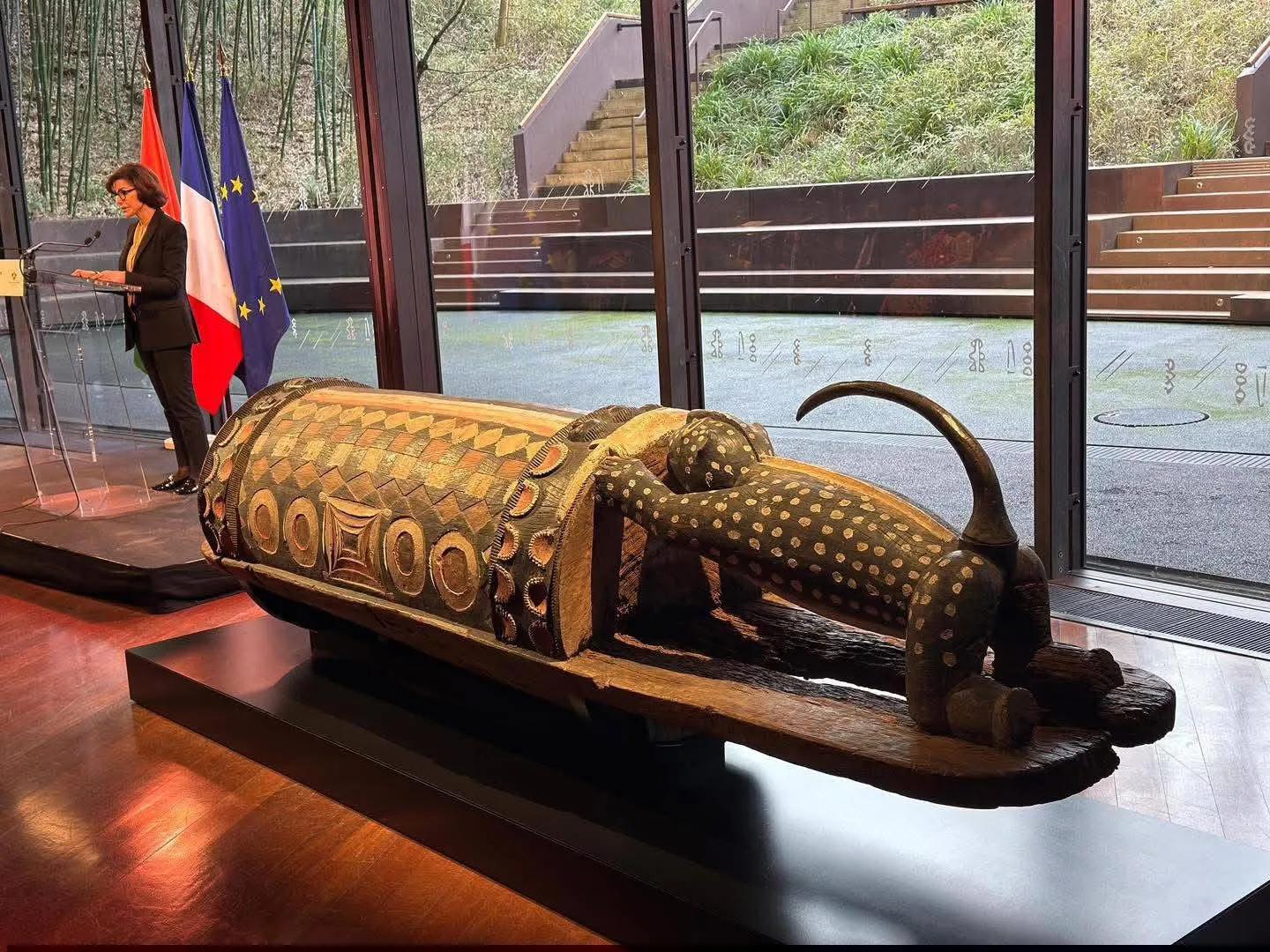
The Ivorian talking Tam Tam "Djidji Ayôkwé", memory of the people, was returned after a long struggle, requiring restoration.
The controversy over its authenticity is unfounded, as the restitution is real and official.
The real challenge for Côte d'Ivoire is the valorization and transmission, so that this object regains its place in the collective consciousness.
Colonization: when the symbols of peoples are torn from their memory
If there are subjects on which we should not waver, it is indeed that of colonization. Indeed, the brutal colonization of a people is one of humanity's worst calamities. For my part, I remain convinced that it is possible to achieve structural changes in a people without violently subjugating them. Colonizers have always told the story of their exploits to their offspring. To make this story alive, they use symbolic objects. But what about the colonized peoples?Their own symbols of resistance, stolen and taken away, are sorely missed in the collective memory.
Let’s take three emblematic examples:
- The sword of El Hadj Oumar Tall, a great resister to French colonization.
- The cannon of Algiers, called by the Algerians "Baba Merzoug" (the blessed father) and by the French "la Consulaire" – named after the consul, Jean Le Vacher, who was attached to its mouth and ejected during a failed attempt by the French navy in 1683.
- And above all, the drum Djidji Ayôkwé, a communication tool that played a crucial role in the resistance of the Atchan people in the early 20th century. These objects, witnesses of our history, have been preserved for decades in French museums.
The restitution of the Djidji Ayôkwé: a long struggle
The request for the restitution of the Djidji Ayôkwé is not new. It dates back to the independence of Côte d'Ivoire. But it was after the report by Senegalese economist Felwine Sarr that the process accelerated.
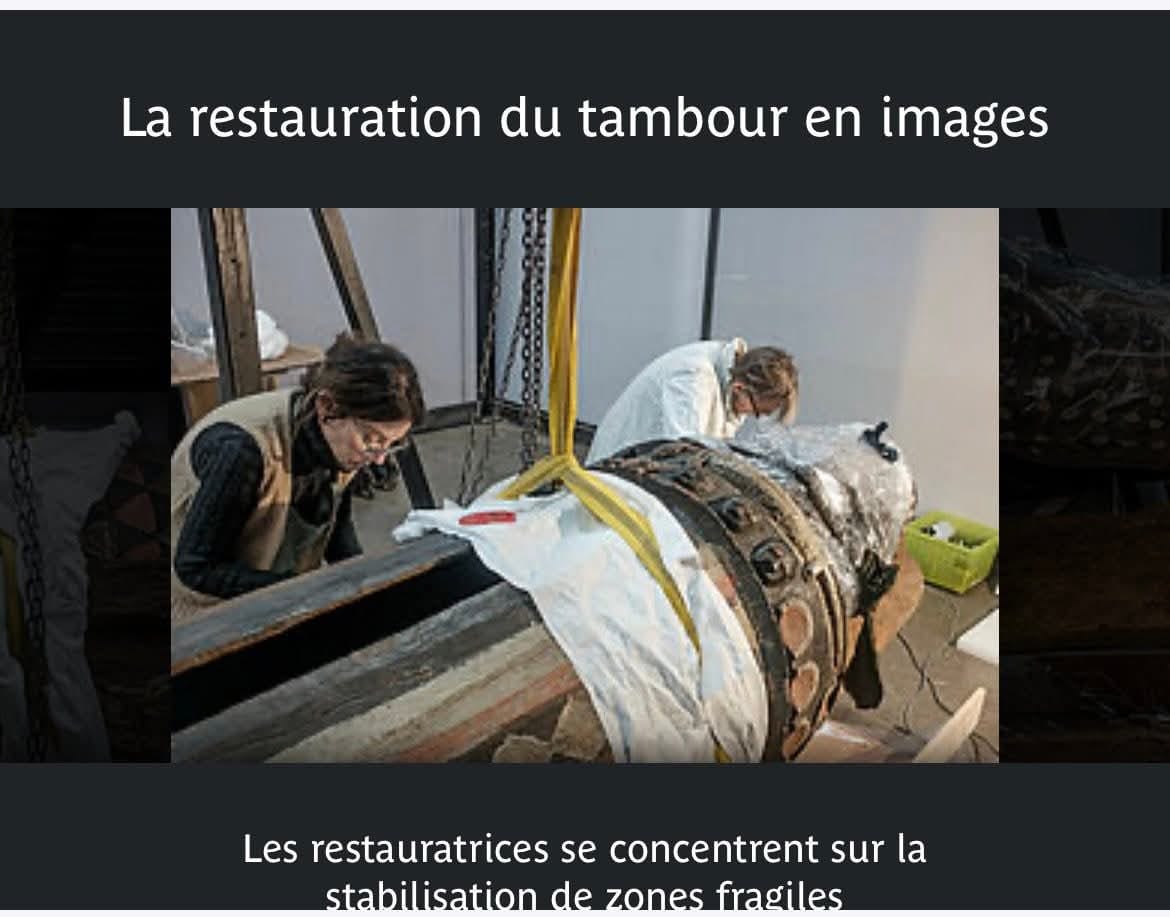
Before its return, a restoration was necessary. Why?
The object had suffered from poor storage conditions, first at the Trocadéro museum, then at the quai Branly museum. How could a wooden drum, after more than 110 years spent in France (not counting the time in Côte d'Ivoire and the boat journey), be in the same condition in 2026 as it was upon arrival? French specialists therefore worked on its restoration, with the expertise of the Ébriés, guardians of this memory. If today the tail of the animal sculpted on the drum appears smaller, it is the result of work carried out in agreement with all stakeholders.
An unfounded controversy
Why this controversy over the authenticity of the returned object? Some stipulate that France could have returned a copy while keeping the original. But let’s ask the question frankly: what interest would France have in organizing an official restitution ceremony with great pomp, under the spotlight of the whole world, only to ultimately hand over a copy to Côte d'Ivoire? Where would the "real" object be displayed in this case? In the reserves of a French museum, away from prying eyes?
This controversy makes no sense. The restitution of the Djidji Ayôkwé is a victory for Côte d'Ivoire, after decades of waiting.
The real issue: museum attendance
Let’s clarify a point: the object will not be used for sacred ceremonies. It will be displayed at the Museum of Civilizations in Abidjan, open to the public.
And this is where, in my opinion, the real challenge lies. A few years ago, I visited Gorée Island in Senegal. I was struck by a striking contrast: thousands of tourists flock every day to the House of Slaves, but the island's museum, which houses the returned sword of Oumar Tall, remains desperately empty.
This observation worries me. What is the point of repatriating our treasures if we do not value them, nor initiate our children into their history and importance?
Passing on to build the future
Let us teach our children to take ownership of our history. I would like to end with this scene that I imagine: a father and his son visiting the Museum of Civilizations in Abidjan together. The father places his hand on his child's shoulder and says:
My son, this object that we see today is a symbol of the resistance of the brave Atchan people against French colonization. It has crossed oceans and centuries to return among us. But the duty of your generation does not stop at contemplating the past. Your mission is to fight for the economic development of our country; that is how you will honor those who fought before you.